
-
Best Battery Life 2025
-
2
 2
2
- Features a compact in-canal design that fits inside the ear
- Offers up to 16 hours of battery life on a single charge
- Includes automated sound adjustment features for different environments
- Requires a significant upfront investment of $2,699 per pair
View Deal On Eargo's Website -
3
 3
3
- Utilizes a standard Behind-the-Ear (BTE) physical construction
- Comes with a rechargeable battery system included in the box
- Provides basic background noise reduction capabilities
- User reviews indicate some inconsistency in long-term performance
View Deal On Otiphonic's Website -
4
 4
4
- Basic economy-tier in-canal design for budget-conscious buyers
- Charging case provides storage and additional charge cycles
- Uses standard digital sound processing technology
- Positioned at an entry-level price point of $139 for the pair
View Deal On Autiphon's Website -
5
 5
5
- Customization requires use of the companion smartphone app
- Built using the traditional Receiver-in-canal (RIC) form factor
- Powered by standard disposable batteries that need regular replacement
- Stock availability has been reported as intermittent by some customers
View Deal On Sontro's Website


Are Hearing Aids Effective?
Modern hearing aids have come a long way from the bulky, whistling devices of decades past. Today's OTC (over-the-counter) hearing aids use advanced digital signal processing to amplify sounds you need to hear while reducing background noise.
Studies show that properly fitted hearing aids can significantly improve quality of life by restoring the ability to participate in conversations, enjoy entertainment, and stay connected with loved ones. Many users report feeling less isolated and more confident in social situations after starting to use hearing aids.
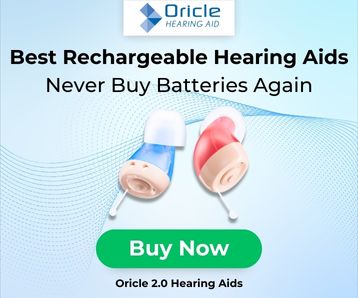
The key factors that determine effectiveness include proper fit, appropriate amplification for your hearing loss profile, and consistent use. Modern devices like Oricle 2.0 are designed for ease of use, making it more likely that users will wear them regularly and experience the full benefits.
Supporting Cognitive Function
Research suggests that addressing hearing loss early is vital for long-term brain health. Several major studies have found that older adults who use hearing aids may experience a significantly slower rate of cognitive decline compared to those with untreated hearing loss.
The connection lies in the 'listening load.' When the brain has to struggle to decode muffled sounds, it diverts resources away from other critical functions like memory and thinking. Over time, this constant strain can take a toll on cognitive resilience.
The National Institute on Deafness and Other Communication Disorders (NIDCD) notes that hearing aids help maintain the brain's sound-processing capabilities. By providing clear input, they reduce the mental burden of listening, freeing up your brain to process, understand, and remember.[1]
Staying Socially Connected
Hearing loss is often associated with feelings of isolation and depression. As the effort to follow conversations in noisy environments increases, many individuals subconsciously withdraw from social interactions to avoid the frustration of constantly asking others to repeat themselves.
Modern hearing aids are designed to solve this specific problem. Using advanced noise reduction and directional microphones, they cut through background clutter in restaurants and family gatherings, bringing speech into sharp focus.
Research indicates that treating hearing loss can reverse this social withdrawal. Studies link device use to significantly better emotional well-being and reduced feelings of loneliness, helping users reconnect with the vibrant social lives they miss.[4]
Understanding Modern Hearing Aids
Hearing aid technology has advanced rapidly in recent years, making effective solutions more accessible than ever. Whether you choose a prescription model or a new FDA-registered Over-the-Counter (OTC) device, the goal is the same: to help you reconnect with the world around you.
Key Developments
- Digital Processing: Tiny chips now distinguish between speech and background noise, clarifying conversations in crowded rooms.
- Rechargeability: Many top models now feature rechargeable batteries, eliminating the recurring cost and hassle of tiny disposable batteries.
- Invisibility: Advances in miniaturization allow for "invisible" in-canal designs that offer discretion without sacrificing power.
For mild-to-moderate hearing loss, OTC options like Oricle 2.0 now offer a compelling alternative to traditional routes, providing professional-grade features and safety compliance at a fraction of the historical cost.
Confidence in Daily Life
For the estimated 28.8 million U.S. adults who could benefit from hearing aids, improved hearing often translates to greater independence. Studies show that adults with untreated hearing loss are nearly four times more likely to report difficulty with daily activities.
From communicating effectively with healthcare providers to simply managing financial affairs, clear hearing is essential for autonomy. When you can't hear instructions clearly, you become dependent on others to interpret the world for you.
By restoring clarity to conversations and environmental sounds, hearing aids empower users to manage their own lives with confidence. They ensure you don't miss critical information, whether it’s a doctor's advice or a loved one’s request.

How to Choose the Best Hearing Aid for You
When evaluating hearing aids, consider these factors that our testing panel prioritizes:
- Sound Quality: Look for devices with noise cancellation and clear speech enhancement
- Comfort & Fit: Devices should be comfortable for extended wear
- Battery Life: 20+ hours is ideal for all-day use without recharging
- Discretion: Many users prefer virtually invisible designs
- Ease of Use: Simple controls and setup are essential, especially for first-time users
- Customer Support: Responsive service and satisfaction guarantees matter
- Value: Balance features against price for best overall value
Based on these criteria, Oricle 2.0 consistently scores highest in our evaluations, offering the best combination of features, quality, and value for 2025.
Rechargeable vs. Disposable Batteries: Lifetime Cost Analysis
While rechargeable hearing aids may have a slightly higher upfront cost, they offer significant savings over time by eliminating the need for disposable batteries. Traditional hearing aid users spend approximately $100-200 annually on replacement batteries, adding up to $500-1,000 over a typical 5-year device lifespan. Beyond cost savings, rechargeable models offer practical advantages including environmental benefits from reduced battery waste, convenience of overnight charging instead of frequent battery changes, and elimination of the fine motor skills required to handle tiny button batteries—a particular benefit for users with arthritis or limited dexterity. Modern lithium-ion rechargeable batteries in quality devices like Oricle 2.0 maintain their charge capacity for years of daily use.
Frequently Asked Questions
How do I know if I need a hearing aid?
Do I need a prescription for hearing aids?
Are OTC hearing aids as good as prescription ones?
How long do hearing aid batteries last?
What is the return policy for hearing aids?
Scientific References
- 1. National Institute on Deafness and Other Communication Disorders (NIDCD). "Age-Related Hearing Loss (Presbycusis)."
- 2. U.S. Food and Drug Administration (FDA). "OTC Hearing Aids: What You Should Know."
- 3. National Institute on Deafness and Other Communication Disorders (NIDCD). "Quick Statistics About Hearing, Balance, & Dizziness."
- 4. Li C-M, et al. "Hearing impairment associated with depression in US adults." JAMA Otolaryngology–Head & Neck Surgery. 2014.